Know The Automatic Gun Types
📅 2026 Update: Changes in Automatic Gun Regulations
Since the original article was published, there have been no significant legislative changes regarding automatic weapons in the United States between 2024 and 2026. Readers can find the detailed information from the earlier article further down this page.
🚫 Eligibility Rules
The rules about who can own automatic weapons remain strict. Certain individuals are still prohibited from possession. This includes anyone convicted of a felony, illegal aliens, and those with domestic violence restraining orders.
The list continues with dishonorably discharged veterans and individuals committed to mental institutions.
- 🔒 Under 21: Anyone under the age of 21 cannot legally possess automatic weapons.
- 🚫 Substance Abuse: Individuals addicted to controlled substances are also banned from ownership.
💰 Current Fees and Costs
The federal tax stamp for automatic weapons remains at $200. This tax is a requirement under the National Firearms Act (NFA) for transferring or making an automatic weapon.
📄 Application Process
To possess an automatic weapon, individuals must submit an application to the Bureau of Alcohol, Tobacco, Firearms and Explosives (ATF). This includes a thorough background check and the payment of the $200 tax.
- 🕒 Processing Times: The approval time for ATF applications can vary, but specific current processing times are not detailed in available sources.
📜 State Regulations
While federal laws are consistent, state regulations can differ. For instance, South Carolina prohibits the possession of automatic guns, with exceptions for military and law enforcement personnel. Always check local laws to ensure compliance.
📌 Key Takeaways
- 🚷 Certain individuals remain prohibited from owning automatic weapons.
- 💵 The $200 federal tax stamp is still required.
- 📝 Applications must go to the ATF for approval.
- 📅 Processing times may vary and are not specified.
- 🏛️ State laws can impose additional rules on ownership.
💡 Tips for Navigating Automatic Weapon Laws
Review your situation with an attorney to ensure you understand the regulations regarding automatic weapons.
📋 Know the Federal Regulations
Familiarize yourself with the National Firearms Act (NFA). This act regulates automatic weapons and includes essential requirements for ownership, such as the $200 tax stamp.
🔍 Check Local Laws
State laws can impose additional restrictions on automatic weapons. Always verify local regulations. Some states like South Carolina have stricter rules than federal laws.
📝 Complete Applications Correctly
Ensure your application to the ATF is filled out accurately. Mistakes can lead to delays or denials. Double-check every detail before submission.
🔒 Understand Eligibility Requirements
Know if you are eligible to own an automatic weapon. Review the list of prohibited individuals carefully to avoid legal issues.
💻 Utilize ATF Resources
The ATF provides a wealth of information. Use their resources for guidance on legal requirements for possessing automatic weapons. This can help you navigate the application process more smoothly.
🏆 Free Options Ranked by User Reviews (2026)
Currently, no national paid service in this area has met the review threshold. This section offers free government and nonprofit resources available for individuals seeking information about automatic weapon laws.
🥇 1. Bureau of Alcohol, Tobacco, Firearms and Explosives (ATF)
The ATF provides essential resources and information regarding the laws and regulations surrounding automatic weapons. This government agency offers guidance on how to apply for permits and comply with federal laws.
🥈 2. State Law Enforcement Agencies
Many state law enforcement agencies provide information about local regulations for automatic weapons. They can help clarify what is permissible in your area and any additional requirements you may need to meet.
🥉 3. Local Gun Safety Organizations
Local nonprofit organizations often focus on gun safety and education. They may offer workshops or resources that can help you understand the responsibilities that come with owning firearms, including automatic weapons.
4️⃣ Public Libraries
Public libraries often have resources on firearms laws and regulations. They may carry books, pamphlets, or access to legal databases that provide further information on automatic weapons.
🔎 What to Check Before Paying for Help
- 🏛️ Verify the legitimacy of the service.
- 🔍 Compare costs and services offered.
- 📜 Read reviews or testimonials from past users.
- 📞 Check if they provide free resources as well.
❓ Frequently Asked Questions
❓ What defines an automatic weapon?
An automatic weapon is defined as any firearm that automatically reloads and fires continuously when the trigger is pressed. This includes types like machine guns and automatic shotguns.
📅 How long does the ATF approval process take?
The approval time for an ATF application can vary widely. Specific processing times are not provided, so applicants should be prepared for potential delays.
🚫 Can anyone under 21 own an automatic weapon?
No, individuals under the age of 21 are prohibited from owning automatic weapons. This rule is in place for safety and legal compliance.
💵 Are there any costs for applying for an automatic weapon?
Yes, there is a $200 tax required for transferring or making an automatic weapon under the National Firearms Act.
🔍 Where can I find more information about state laws?
Local law enforcement agencies and state government websites often provide details about regulations specific to your state. Always check these resources for the most accurate information.
📋 What happens if my application is denied?
If your application to the ATF is denied, you will receive a notification explaining the reasons. It may be necessary to correct any issues before reapplying.
⚖️ Recent Cases Related to Automatic Weapons
Recent court rulings have addressed issues related to the legality and ownership of automatic weapons in the U.S. These cases are important for understanding the current legal landscape.
- New York court rules flare gun case stays in Youth Part systemNew York County Court, Albany County · April 21, 2026
- Court orders DNA sample from defendant in weapons caseThe Criminal Court of the City of New York, Bronx · July 16, 2026
- Fourth Circuit affirms firearm possession sentence for JenningsCourt of Appeals for the Fourth Circuit · October 16, 2026
- Fourth Circuit upholds sentence for firearm possession caseCourt of Appeals for the Fourth Circuit · October 16, 2026
For more recent rulings, feel free to browse more rulings on the news page.
End of October 2026 Update
An automatic gun refers to any firearm which reloads itself and fires continuously when the trigger is squeezed. For example, an automatic gun with 20 rounds will be fully discharged with one pull of the trigger. This firing rate differs from semi-automatic weapons, which would require 20 trigger squeezes to empty the chamber. There are a few different classifications of automatic weapons:automatic pistols, assault rifles, machine guns, and automatic shotguns.
The term 'machine gun' carries two distinct definitions-both a military and civilian interpretation. The general public commonly refers to any automatic gun as a machine gun, while the military has classified such weapons as heavy artillery fired from a supported position. Specifically used in the military, machine guns are commonly belt fed and mounted on a tripod or on top of a vehicle. Machine guns are subdivided into 4 groups:light, medium, heavy, and general purpose.
Not to be confused with hand-held automatic guns, the term "light" refers to such firearms that fire bursts of 8-10 rounds from a tripod or other mounted position. Examples of light machine guns include: squad automatic weapons (SAWS), RPKs, and M60s. Medium machine guns are also belt fed and shot from a supported position, however, they fire a larger caliber of ammunition and are considerably heavier than the light machine gun.
Examples of medium machine guns include:the Gatling gun and the M240. The heavy machine gun fires a caliber of 12 mm or 12.7 mm, and was designed to penetrate large structures such as vehicles, buildings, or fortifications. The general purpose automatic gun is a multi-purpose weapon and can take on the role of any machine gun. General purpose machine guns are man-portable and are fired from a seated position, supported by a bi-pod or tripod.
The assault rifle is the most common form of automatic gun used for infantrymen in modern warfare. Assault rifles have detachable magazines that commonly contain a 5.65X45mm to 7.62X39 mm caliber cartridge. This form of automatic gun has selective fire, which allows the operator to switch between semi-automatic and fully-automatic firing modes. Common forms of assault rifles include:M16s, AK-47s, and the G36.
The automatic shotgun is perhaps the least common form of automatic gun. As oppose to a regular shotgun which requires a reload and cock-back, the automatic form is able to fire continuously while the trigger is held. The automatic shotgun uses gas to eject empty shells and subsequently reload the next cartridge. The weapon uses a 12 gauge cartridge, is fed through an 8 round box magazine or 20-32 round drum magazine, and can fire at a rate of 350 rounds per minute.
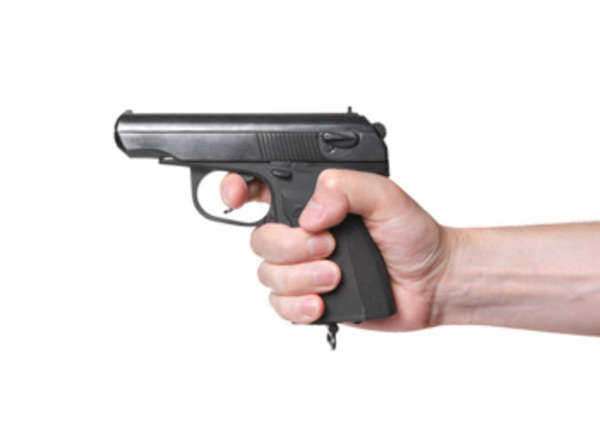
The automatic pistol is a small hand-held firearm capable of automatic or burst fire. The automatic pistol is magazine-fed and most commonly used by the SWAT team or as a sidearm weapon for infantrymen. The automatic pistol uses common hand-held ammunition and possess a rate of fire between 1000-1200 rounds per minute.
Common forms of automatic pistols include:Mac-10s, Tec-9s, and the Beretta 93r. Although automatic guns are classified into particular groups, there is considerable overlap between certain compact sub-machine guns and automatic pistols.