What Are The Semi Automatic Gun Laws
📅 2026 Update: Recent Changes in Semi-Automatic Gun Laws
Since the original article was written, several significant changes have occurred in the laws surrounding semi-automatic firearms. These changes impact the definition and regulation of certain firearms, background checks, and state laws. The previous content remains relevant and is provided further down the page.
⚖️ Supreme Court Ruling on Bump Stocks
On June 14, 2024, the Supreme Court ruled in *Garland v. Cargill* that a semi-automatic rifle with a bump stock is not classified as a machine gun under federal law. This ruling overturned the ATF's prior 2018 classification, affecting how bump stocks are viewed legally.
🔄 Changes in Forced Reset Trigger Regulations
In May 2025, the Department of Justice settled litigation concerning forced reset triggers (FRTs). The settlement means that specific models, such as Rare Breed FRT-15s and Wide Open Triggers, will not be enforced under machine gun statutes for possession or transfer.
📜 Colorado's New Gun Law
As of August 1, 2026, Colorado's Senate Bill 25-003 took effect. This law bans the sale, purchase, manufacture, and transfer of most semi-automatic rifles and shotguns with detachable magazines, along with certain gas-operated semi-automatic handguns.
📝 Current Fees and Costs
Under the National Firearms Act (NFA), there is a $200 transfer tax for machine guns, which includes those converted from semi-automatic firearms. Machine guns made before May 19, 1986, typically start at a minimum price of $25,000 for civilian purchase.
📅 Processing Times for Form 4
As of early 2026, the median processing times for submitting Form 4 for machine gun transfers are under 30 days. This is an improvement from previous years, making it easier for individuals to navigate the transfer process.
📌 Key Points to Remember
- ⚖️ Bump stocks are not classified as machine guns under federal law.
- 🔄 Forced reset triggers have specific exemptions from machine gun laws.
- 📜 Colorado's SB 25-003 imposes new restrictions on certain semi-automatic firearms.
- 💰 A $200 transfer tax applies to machine guns under the NFA.
- ⏳ Processing times for machine gun transfers are now under 30 days.
💡 Tips for Understanding Semi-Automatic Gun Laws
Review the details of your own situation with your attorney.
📋 Know the Minimum Age Requirements
Federal law requires individuals to be at least 18 years old to purchase rifles and shotguns. To buy handguns from licensed dealers, you must be at least 21 years old.
🔍 Understand Background Checks
All firearm purchases from licensed dealers require a background check. This is done through the National Instant Criminal Background Check System (NICS) to ensure the buyer is eligible.
🏛️ Explore ATF Resources
The Bureau of Alcohol, Tobacco, Firearms and Explosives (ATF) provides guidance on firearm laws and regulations. Their resources can help clarify any confusion about the legal status of semi-automatic firearms.
⚖️ Be Aware of State Variations
Laws regarding semi-automatic firearms can vary widely by state. Check your state’s specific regulations, as some may have stricter rules than federal law.
📅 Keep Track of New Laws
Stay updated on any new laws or changes. Legislative actions can happen frequently, and being informed is essential for compliance.
🔒 Know the Definition of Machine Guns
Understanding the definition of machine guns under federal law can clarify what is legal to own and what is not. A machine gun is defined as a weapon that can fire more than one shot automatically with a single pull of the trigger.
🏆 Free Options Ranked by User Reviews (2026)
No national paid service in this area met the review threshold, so this section lists free government and nonprofit resources available.
🥇 1. ATF Resources
The Bureau of Alcohol, Tobacco, Firearms and Explosives (ATF) offers comprehensive guidance on firearm laws. Their resources are designed to help individuals understand federal regulations regarding firearms.
🥈 2. Everytown for Gun Safety
Everytown for Gun Safety is a nonprofit organization that provides information on gun laws and safety measures. They focus on educating the public about responsible gun ownership and advocating for safer communities.
🔎 Before Paying for Help
- 📜 Check for government resources available for free.
- ❓ Verify that the information is current and accurate.
- 🏷️ Look for nonprofit organizations that provide support.
- 📅 Stay informed about changes in gun laws regularly.
❓ Frequently Asked Questions
❔ What types of firearms are considered semi-automatic?
Semi-automatic firearms fire one round with each trigger pull and automatically load the next round from a magazine. This category includes many popular rifles and handguns.
🔒 Are bump stocks legal in all states?
While bump stocks are not classified as machine guns under federal law, some states have enacted their own bans. Always check local laws before purchasing or using a bump stock.
📅 What is the process for transferring a machine gun?
To transfer a machine gun, you must submit ATF Form 4 and pay a $200 transfer tax. The process typically takes under 30 days.
🏛️ How can I stay updated on state gun laws?
Regularly visit state government websites or follow nonprofit organizations that focus on gun safety. They often provide updates on legislative changes and new laws.
🔍 What should I do if I have a forced reset trigger?
As of early 2026, specific forced reset triggers are legal under federal law. However, check your state laws as some may prohibit their possession or transfer.
📜 Where can I find more information on gun laws?
The ATF and nonprofit organizations like Everytown for Gun Safety provide valuable information on gun laws. Their resources can help clarify any questions you might have.
⚖️ Recent Cases Impacting Semi-Automatic Gun Laws
Recent court rulings have influenced the landscape of semi-automatic gun laws in the U.S. These decisions address the classification and regulation of certain firearms.
- Texas Court upholds conviction of felon for firearm possessionTexas Court of Appeals, 3rd District (Austin) · October 20, 2026
- New Jersey court vacates weapon possession convictionNew Jersey Superior Court Appellate Division · April 6, 2022
- New Jersey Court Rules on Gun Permit Statute's ConstitutionalityNew Jersey Superior Court Appellate Division · August 10, 2023
- New Jersey court orders hearing on gun seizure caseNew Jersey Superior Court Appellate Division · May 26, 2023
For more recent rulings, check out more rulings on the news page.
End of October 2026 Update
Laws regarding semi automatic weapons are relatively novel in the United States. President Clinton's passing of the 1994 Federal Assault Weapons Ban (AWB) is the groundbreaking piece of legislation in regards to the sale and use of semi automatic guns. Before 1994 semi automatic weapons were not defined, and instead left up to interpretation and ambiguous judgments in regards to classification.
The AWB defined all semi automatic guns as "assault weapons"-which refers to a firearm that can automatically discard spent cartridges and subsequently reload the next round without human intervention. For semi-automatic guns to be labeled as assault weapons, the gun in question must contain at least 2 of the following 5 features for its specific classification-
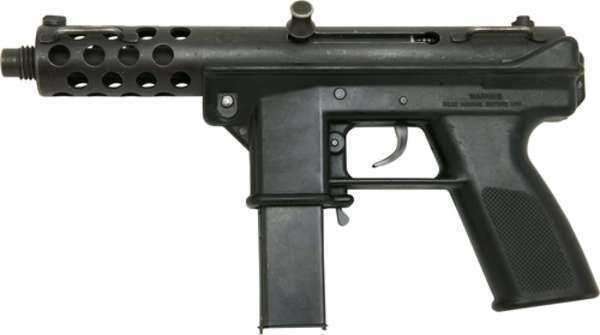
Semi automatic rifles with two or more of the following
Folding or telescoping stock
Pistol grips
Bayonet mount
Flash suppressor
Grenade launcher attachment
Semi automatic pistols with 2 or more of the following
Magazine that attach outside the pistol grip
Unloaded weight of 50 oz
Flash suppressor, barrel extender, hand grip, or suppressor attachments present
Barrel shroud can be used as a hand held
A semi-automatic version of a fully automatic gun
Semi automatic shotguns with 2 or more of the following
Pistol grip
Folding or telescope stock
Fixed capacity of more than 5 rounds
Detachable magazine
The Federal Assaults Weapons Ban was a subtitle of the Violent Crime Control and Law Enforcement Act of 1994. Through its definition the act placed a ban on 19 firearms which were labeled as illegal semi automatic weapons. The act specifically addressed semi automatic guns, which are firearms that discharge one bullet each time the trigger is depressed. To further curb the use of semi-automatic guns, the Federal government attached a ban on "large capacity ammunition feeding devices. These large magazines held between 10-20 rounds and were primarily attached to semi automatic weapons.
The AWB outlawed possession or purchase of any "assault rifle" or large capacity magazine unless the weapon in question was transferred or obtained through a government agency or for law enforcement purposes. The act did not regulate pre existing semi automatic weapons, but did however, make it illegal to produce or manufacture any new semi automatic guns that fell under the classification of an assault rifle.
The ban on semi automatic weapons did help to decrease violent crime rates, however, assault weapons were used so infrequently (2-8% of all violent crimes were committed with an assault rifle) before the ban that the AWB was not renewed upon its expiration in 2004. President George W. Bush so no reason to renew the act, citing that crime rates have been stable since the bills death. There have been talks of modifying the act under President Obama's "common sense" stance, however, there is no definite time table for such an act to be passed.
Like other gun laws, semi automatic weapons are also regulated on a state level. Currently New York, Connecticut, Massachusetts, New Jersey, California, and Cook County in Illinois are the only states who have adopted a similar ban on semi automatic weapons. New York City has adopted all of the same regulations and principles found in the AWB, with the exception of the sunset provision-the ban on semi automatic weapons in New York City has no date for expiration.
It is difficult to weigh the importance of the AWB because of the unique dichotomy present in semi automatic weapons. Although the firearms are powerful and extremely dangerous, they have been used infrequently in regards to acts of violence in the United States. Although rare, Semi-automatic guns do pose severe threats; especially in cases such as the Columbine shootings or other mass murders where these guns were present.