Guide to Origins of Illegal Firearms
📅 2026 Update: Changes Affecting Firearm Regulations
Since the original article was written, there have been significant developments in U.S. firearm laws. Key updates include the reauthorization of the Undetectable Firearms Act and changes to tax regulations for firearms. The discussion below highlights these changes and their implications for gun ownership and regulation.
🔫 Undetectable Firearms Act Reauthorization
In March 2024, Congress reauthorized the Undetectable Firearms Act, extending it through 2031. This law prohibits firearms that cannot be detected by metal detectors or X-ray machines. It specifically targets 3D-printed guns, which are often made from materials that evade detection.
This measure aims to enhance security in public spaces by ensuring all firearms are traceable.
💵 Tax Changes for NFA Items
Effective January 1, 2026, the One Big Beautiful Bill Act eliminated the federal tax for transferring or manufacturing certain NFA items. This includes suppressors, short-barreled rifles, short-barreled shotguns, and "any other weapons" (AOWs). However, machine guns and destructive devices still incur a $200 tax.
This change may affect the affordability and accessibility of these items for responsible gun owners.
📈 Rise in Privately Made Firearms (PMFs)
From 2017 to 2023, there was a dramatic rise in the number of privately made firearms (PMFs) reported. The number of PMFs recovered in crimes surged nearly 1,600%, from 1,629 to 27,490. Nearly 1,700 of these firearms were linked to homicides, with over 4,000 associated with other violent crimes.
This alarming trend highlights ongoing challenges in regulating homemade firearms and their impact on public safety.
⚙️ Increase in Machinegun Conversion Devices (MCDs)
Recoveries of machinegun conversion devices (MCDs) saw a staggering increase of 784% between 2019 and 2023. These devices allow semi-automatic firearms to be converted into machine guns, raising serious concerns about gun control enforcement. This trend underlines the need for more robust measures to monitor and control these modifications.
📌 Key Points Summary
- 🔒 Undetectable Firearms Act reauthorized through 2031.
- 💰 Federal tax for certain NFA items set to $0 as of January 1, 2026.
- 📈 PMFs recovered in crimes increased nearly 1,600% from 2017 to 2023.
- ⚙️ Recoveries of MCDs rose by 784% between 2019 and 2023.
- 📉 Ongoing challenges in regulating homemade firearms and conversion devices.
💡 Tips for Understanding Firearm Regulations
Review the details of your situation with your attorney to ensure compliance with current laws.
📝 Know Your State Laws
Each state has its own laws regarding firearms. For example, states like California and New York have stringent regulations, including registration requirements. Familiarizing yourself with local laws is crucial for responsible gun ownership.
🔍 Understand NFA Requirements
To legally possess an NFA item, individuals must submit the appropriate ATF forms. This process includes a background check and payment of any applicable taxes. Make sure you have all the necessary paperwork ready to avoid delays.
🕒 Plan for Processing Times
NFA applications can take a long time to process. Applicants should submit their forms well in advance of any planned transfers or manufacturing to avoid complications. Check the ATF's website for current processing times.
🚫 Be Aware of Prohibited Persons
Certain individuals are prohibited from owning firearms under 18 U.S.C. § 922(g). This includes convicted felons and those under domestic restraining orders. Understanding these restrictions is essential to avoid legal issues.
⚠️ Monitor for New Developments
Firearm laws are subject to change. Stay informed by regularly checking reliable sources for updates on regulations. Changes can significantly impact your rights and responsibilities as a gun owner.
🔒 Secure Your Firearms
With the rise in firearm theft and trafficking, it is vital to secure your firearms properly. Use safes or locks to prevent unauthorized access. This protects not only your property but also the public from potential misuse.
🏆 Firearm Services Ranked by User Reviews (2026)
This section discusses services related to firearms, emphasizing their relevance to firearm ownership and regulation. The order is based on Trustpilot data as of October 2026, and star ratings may fluctuate over time. Ratings often reflect more dissatisfied customers, so consider this when evaluating services.
🥇 1. GunBroker.com
GunBroker.com has been rated 4.5 stars. This platform serves as an online marketplace for firearms and accessories, promoting responsible gun ownership. It is known for a vast selection of products, making it easier for buyers to find what they need.
However, users have noted that there can be delays in customer service response times due to increased sales.
🆓 ATF Resources
The ATF provides free resources for understanding firearm laws. This includes guidance on NFA items and information about prohibited persons. Utilizing these resources can help gun owners navigate complex regulations without incurring costs.
🔎 Factors to Compare When Choosing Firearm Services
- 📊 User Ratings: Look for services with high ratings on platforms like Trustpilot.
- 🔄 Response Time: Consider how quickly customer service responds to inquiries.
- 🔍 Product Selection: Evaluate the variety of firearms and accessories available.
- ⚖️ Compliance Guidance: Check if the service offers information on legal requirements.
- 💰 Fees and Charges: Be aware of any fees associated with transactions or services.
❓ Frequently Asked Questions
❓ What is the Undetectable Firearms Act?
The Undetectable Firearms Act prohibits firearms that cannot be detected by metal detectors or X-ray machines. This includes 3D-printed guns that lack serial numbers.
🔒 Who is considered a prohibited person?
Under 18 U.S.C. § 922(g), prohibited persons include convicted felons, fugitives from justice, and individuals under domestic restraining orders. These individuals cannot legally possess firearms.
📅 How long does the NFA application process take?
Processing times for NFA applications can vary widely. Applicants should check the ATF's official website for the most current information regarding wait times.
🔍 What are PMFs, and why are they a concern?
Privately made firearms (PMFs) are guns that are made without serial numbers. The rise in PMFs recovered from crime scenes raises serious concerns about regulation and public safety.
⚙️ What are machinegun conversion devices?
Machinegun conversion devices are tools that allow semi-automatic firearms to function as machine guns. Their recovery has increased significantly in recent years, prompting calls for stricter controls.
📈 How can I stay updated on firearm laws?
To stay informed about changes in firearm laws, regularly check reliable news sources and government announcements. Being proactive can help you remain compliant with current regulations.
⚖️ Recent Court Cases on Firearm Regulations
Recent court rulings have addressed various aspects of firearm laws, including the legality of certain weapons and regulations surrounding gun ownership.
- Court upholds conviction of Charles Ewing, Jr. for firearm chargeCourt of Appeals of Arkansas · September 30, 2026
- Court Denies Motion to Suppress Evidence in Gun CaseDistrict Court, District of Columbia · July 3, 2026
- Court upholds gun evidence in case against Mark Antoine WestDistrict Court, District of Columbia · July 22, 2026
- Court Rules on Evidence in Aiken Gun Possession CaseDistrict Court, District of Columbia · September 9, 2026
For more information on recent rulings, you can browse more rulings on the news page.
End of October 2026 Update
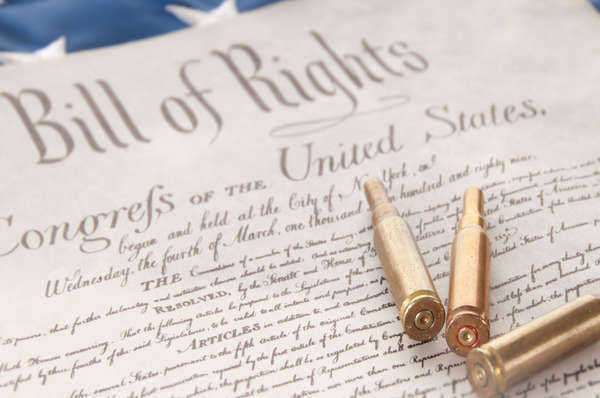
The origins of the problem of illegal firearms in America go back to, first and foremost, the 2nd Amendment. The 2nd Amendment is one of the most contentious amendments in the Constitution, Bill of Rights and all, if for no other reason than all gun control laws must stand opposed to it to some extent.
The text of the Amendment reads: "A well regulated militia being necessary to the security of a free State, the right of the People to keep and bear arms shall not be infringed." This Amendment was partly an attempt to prevent future treatment, the likes of which the American people had suffered during British rule, as rifles held by Americans were deemed illegal firearms and could be seized at the British troops' leisure.
The Amendment was, at least in part, an attempt to prevent such blatant violations of freedom in the future. Out of the phrasing of the Amendment, of course, there also came a focus on defending the country, providing for the security of America through the ability to create a militia in times of need.
The 2nd Amendment was debated at the time, and through the ages, but the first time gun control laws were deemed necessary was in 1934, with the National Firearms Act. This law was, in fact, the first that truly made the idea of illegal firearms possible. This was the first of the twentieth century's gun control laws. It put a $200 tax (which is equivalent to $2,525 today) on every firearm for all gun sales and gun manufacturers.
Furthermore, buyers were required to submit paperwork to the Treasury Department. Obviously, then, with such restrictions on firearms put into effect, it was only a matter of time before individuals sought illegal firearms, which did not need to be obtained via the arduous process set out in the gun control laws.
The Gun Control Act of 1968 is still one of the most prominent gun control laws in America, and it sets out some of the most important federal provisions preventing certain individuals from obtaining firearms legally.
This Act is further supported by the Brady Handgun Violence Prevention Act of 1994, which enforced the same sets of prohibitions. With every one of these attempts to place greater restrictions upon firearms, the problem of illegal firearms grew worse.
The people who were being prohibited from obtaining firearms legally were exactly the people who would have no second thoughts about obtaining illegal firearms. Thus, as restrictions sprang up, attempting to make it harder for firearms to be sold in general, illegal firearms grew in number across the country.
It certainly was not a help in the attempt to eliminate illegal firearms that gun control laws, concerning anything other than certain common-sense prohibitions about those who were able to legally purchase firearms, were in fact state laws, and not federal laws.
This meant that gun control laws were by no means uniform across America, and furthermore, previously legal firearms could become illegal firearms simply by crossing the state boundary, as not all states recognize permits given by other states.
The growth of illegal firearms seems correlated to the rise of gun control laws in America, though there are obviously other factors, such as increased population centers and improving technologies in manufacturing. But the main point remains that the problems of illegal firearms today seem to stem from the gun control laws of yesterday.