Understand The Shotgun Concerns Before Buying
📅 2026 Update: Changes in Short-Barreled Shotgun Regulations
Since the original article was published, key changes have occurred in the regulations surrounding short-barreled shotguns. In particular, the federal tax for registering these firearms has been significantly reduced. Readers can find the details of these changes below, along with the original article further down this page.
💰 Federal Tax Reduction
As of January 1, 2026, the federal tax for registering short-barreled shotguns under the National Firearms Act (NFA) has been cut from $200 to $0. This change makes it more financially accessible to legally own these firearms.
📝 NFA Registration Process
To own a short-barreled shotgun, individuals must complete the NFA registration process. This involves submitting ATF Form 4, providing fingerprints, and undergoing a background check. Approval from the ATF is required before the firearm can be possessed.
⏳ Processing Times
The approval process for NFA items, including short-barreled shotguns, generally takes several months. The exact time can vary based on various factors, including application volume and processing efficiency.
🔒 Eligibility Rules
To purchase a shotgun, individuals must be at least 18 years old. Federal law also prohibits certain individuals, such as those with felony convictions or specific mental health conditions, from purchasing firearms.
📌 Key Points
- The federal tax for registering short-barreled shotguns is now $0.
- A completed ATF Form 4 is necessary for registration.
- Approval times for NFA items can take several months.
- Buyers must be at least 18 years old and meet eligibility criteria.
💡 Tips for Navigating Short-Barreled Shotgun Regulations
Review the details of your situation with an attorney to ensure compliance with current laws.
📄 Understand the NFA Requirements
Know that owning a short-barreled shotgun requires compliance with the NFA. This includes submitting the correct forms and receiving ATF approval. Familiarize yourself with these steps to avoid legal issues.
📅 Be Aware of State Laws
State laws can differ from federal regulations regarding short-barreled shotguns. Some states may impose additional restrictions or bans. Always check local laws before making a purchase.
🔍 Research Processing Times
If you plan to register a short-barreled shotgun, be aware that the approval process can take several months. Allow ample time for approval before expecting to take possession of the firearm.
🔒 Verify Your Eligibility
Confirm that you meet the eligibility requirements for purchasing a shotgun. Individuals with felony convictions or certain mental health issues are prohibited from buying firearms.
📦 Understand Online Purchase Rules
If you decide to purchase a shotgun online, ensure you follow the rules for shipping. The firearm must be sent to a licensed Federal Firearms Licensee (FFL) dealer for the necessary background check and transfer.
🏆 Free Options Ranked by User Reviews (2026)
Currently, there are no national paid services that meet the review threshold for assistance with short-barreled shotguns. Instead, the following free government and nonprofit resources can provide guidance on firearm laws and registration.
🥇 1. ATF Resources
The Bureau of Alcohol, Tobacco, Firearms and Explosives (ATF) offers resources on firearm laws, including the registration process for short-barreled shotguns. Individuals can access guidance on completing necessary forms and understanding federal regulations.
🥈 2. Local Law Enforcement
Local law enforcement agencies can provide information on state and local laws regarding shotgun ownership. They can also assist with any questions about the registration process and eligibility requirements.
🥉 3. State Firearm Agencies
Many states have their own firearm agencies that offer resources tailored to local regulations. These agencies can help individuals understand specific state laws related to owning short-barreled shotguns and provide assistance with registration.
4️⃣ Community Workshops
Some community organizations host workshops on firearm safety and laws. These workshops often include information on registration processes and eligibility, making them a valuable resource for prospective shotgun owners.
🔎 What to Check Before Paying for Help
- ✅ Confirm the legitimacy of the service provider.
- ✅ Check for user reviews or testimonials.
- ✅ Ensure they specialize in firearm laws and regulations.
- ✅ Verify any fees associated with their services.
❓ Frequently Asked Questions
🤔 What are the penalties for possessing an unregistered short-barreled shotgun?
Possessing an unregistered short-barreled shotgun is a federal crime. It can lead to severe penalties, including imprisonment for up to 10 years.
📝 How can I check the status of my NFA application?
You can check the status of your NFA application by contacting the ATF. They can provide updates on your application and its current processing status.
🚪 What should I do if I am denied a firearm purchase?
If denied, individuals can request a copy of the denial from the dealer and review the reasons. Understanding the denial can help in addressing any issues for future applications.
🥇 Are there any exceptions to the age requirement for purchasing shotguns?
Currently, there are no exceptions to the age requirement. Individuals must be at least 18 years old to purchase a shotgun from a licensed dealer.
🔍 Can I modify my shotgun without registering it?
Modifying a shotgun to have a barrel shorter than 18 inches or an overall length under 26 inches without proper NFA registration is illegal. Such modifications can lead to legal consequences.
📦 What is the process for purchasing a shotgun online?
Purchasing a shotgun online requires the firearm to be shipped to a licensed Federal Firearms Licensee (FFL) dealer. The dealer will conduct the necessary background check and facilitate the transfer.
⚖️ Recent Cases Related to Short-Barreled Shotguns
Recent court rulings have addressed issues related to firearm ownership and regulations. These cases often connect to topics surrounding short-barreled shotguns and their legality.
- New York court affirms conviction in gun possession caseAppellate Division of the Supreme Court of the State of New York · June 26, 2026
- New York court affirms weapon possession convictionAppellate Division of the Supreme Court of the State of New York · June 26, 2026
- New York court affirms conviction in weapon possession caseAppellate Division of the Supreme Court of the State of New York · June 26, 2026
- New York court upholds conviction of Ronzell Camber in weapons caseAppellate Division of the Supreme Court of the State of New York · June 26, 2026
For updates on more recent rulings, feel free to browse more rulings on the news page.
End of October 2026 Update
A shotgun is a powerful form of firearm typically fired from the shoulder. Although there are varying sizes, the average shotguns is a large burly weapon, which uses energy from a fixed shell to dispense a number of small spherical pellets. Unlike common forms of ammunition, the shotgun fires a cartridge which then disperses into smaller fragments. Although the range from the blast is limited, the widening angles available from the dispersed pellets are unmatched.
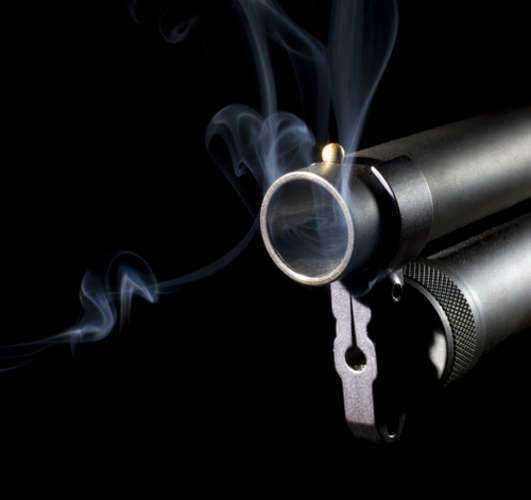
Weapons such as shotguns and rifles are thought to be used primarily for hunting and recreation. That being said, the laws regarding such weapons are fairly lax and casual throughout the United States. A prospective buyer will encounter limited red tape or procedural barriers when attempting to purchase, use, or carry a shotgun.
The average state does not require a permit for purchase, a license for ownership, a registration, nor even a permit for concealed carry. The ideology behind this casual stance stems from the weapons intended use. As a result of their size and cumbersome nature the practicality behind wielding a shotgun in public is unrealistic. Unlike pistols which are concealable and easy to tot around, the shotgun is a large firearm (on average 28-32 inches long) incapable of concealment or inconspicuous use.
Statistics regarding shotgun related deaths have not been recorded on a national scale. Considering handguns make up 50% of homicides via firearms one would imagine that shotguns have played a role in roughly 20% of all murders.
The primary difference between shotgun related murders and handgun murders is their intent and nature. The majority of deaths imposed by shotguns are hunting accidents, suicides, and mass shootings. An overwhelming percentage of firearm homicides occur in America's urban environments.
The majority of shotguns are found in rural areas or states with fertile hunting grounds. When you couple these facts together, the nature of shotguns becomes transparent. As a result of their size, limited range, bulkiness, and inherent nature the shotgun is simply impractical in regards to precipitating separate acts of violence.
The average firing rate of a shotgun is extremely slow. An operator must first, withstand the blowback from the powerful discharge, then manually reload two more cartridges (given the style of shotgun.) Unlike revolvers, semi-automatic weapons, or fully-automatic guns a shotgun operator wastes precious seconds when reloading his/her weapon. This inherent feature of the weapon directly impedes the gun's firing rate.
Although the cartridges are more powerful, they cannot be fired without manual intervention. The major concern associated with shotguns is their accessibility. As a result of their deregulation, an individual who is unstable is more than capable of obtaining such a weapon. Given the prospective user, the weapons convenience combined with its innate power could result in catastrophic implications.
Shotguns have played a major role in many of the infamous shooting sprees in American history. Instances such as the Columbine massacre are a reminder of the dangers and accessibility that these weapons possess. That being said, the true concerns associated with the shotgun are simply based on the individual's intentions.
The weapon is deregulated because it has plays an intricate part in many hunting, recreational, and competitive activities. For the majority of Americans, shotguns symbolize a rite of passage, a symbol of our nation's history, but for others, the convenience and potent nature represent an opportunity to inflict harm on a community.