Rifles Explained
📅 2026 Update: Changes in US Gun Law and Regulations
Since the original article on rifles, there have been updates regarding U.S. gun laws and regulations. These changes impact how individuals buy and own firearms, as well as the legal landscape surrounding gun ownership. The earlier article continues further down the page for more in-depth information.
🔍 Recent Developments in the Second Amendment
The Second Amendment remains a fundamental part of discussions on gun ownership. Its interpretation continues to evolve through various court cases. This ongoing legal landscape can affect how laws are applied in practice.
🏛️ Federal Firearms Regulations
The Bureau of Alcohol, Tobacco, Firearms and Explosives (ATF) remains the main authority on federal gun laws. They provide up-to-date information on classifications, licensing, and compliance. Their resources are essential for understanding current regulations.
🗺️ State Variations in Gun Laws
Gun laws differ significantly from one state to another. Each state has its own set of rules regarding background checks, concealed carry permits, and more. It is important to check your state’s regulations for the most accurate and relevant information.
📜 Legal Aid Resources
Various legal aid organizations exist to help individuals understand their rights regarding firearms. These nonprofit groups can provide guidance on navigating gun laws. Their services are especially useful for those who may not have access to legal representation.
📅 Historical Context of Gun Ownership
The Second Amendment, ratified in 1791, emphasizes the right to bear arms. Its historical significance shapes current debates on gun ownership. Understanding this context can provide clarity on ongoing discussions about firearms regulations.
📌 Key Points on Gun Laws and Ownership
- 🔑 The Second Amendment remains central to gun ownership debates.
- 🔑 The ATF is a key source for federal firearms regulations.
- 🔑 State laws vary widely, necessitating localized research.
- 🔑 Legal aid organizations can assist with understanding firearms laws.
- 🔑 Historical context informs current discussions on gun regulations.
💡 Tips for Understanding Gun Ownership Regulations
Reviewing your specific situation with an attorney is crucial to ensuring compliance with gun laws.
📖 Know Your State Laws
Each state has its own rules regarding firearms. It's essential to research these laws, especially for background checks and permits, to know what applies to you.
📄 Understand Background Check Requirements
Background checks are often required when purchasing firearms. Knowing the federal and state requirements can help you navigate the buying process smoothly.
🔒 Explore Concealed Carry Permits
If you're interested in carrying a concealed weapon, you must apply for a permit. Familiarize yourself with your state's application process and eligibility criteria.
📞 Utilize Government Resources
The ATF and state government websites provide valuable information on gun laws. These resources can help clarify any questions you might have about buying or owning firearms.
🏢 Access Legal Aid
If you need assistance with understanding your rights or navigating gun laws, seek help from legal aid organizations. They can provide guidance tailored to your situation.
🏆 Free Options Ranked by User Reviews (2026)
Currently, there are no national paid services that meet the review threshold for gun law assistance. Instead, this section lists free government and nonprofit resources to help you navigate firearms regulations.
🥇 1. Bureau of Alcohol, Tobacco, Firearms and Explosives (ATF)
The ATF provides comprehensive information on federal firearms regulations. Their website covers classifications, licensing, and compliance requirements. This resource is crucial for anyone looking to understand their responsibilities under federal law.
🥈 2. National Rifle Association (NRA)
The NRA offers various resources related to firearm classifications and safety. They provide information on legal considerations for gun owners. This organization can be a helpful starting point for understanding the legal landscape of firearms.
🥉 3. State Government Websites
Each state's official website is a valuable resource for specific gun laws. These sites often include information on fees, processes, and eligibility requirements. Checking your state's website can ensure you have the most accurate information.
4️⃣ Legal Aid Organizations
Nonprofit organizations specializing in legal aid can help individuals understand their firearm rights. They offer guidance and support to those who may not have access to legal representation. This assistance can be vital for navigating complex gun laws.
🔎 What to Check Before Paying for Help
- 🔍 Verify the source’s credentials.
- 🔍 Look for reviews or testimonials from other users.
- 🔍 Ensure they provide clear information on their services.
- 🔍 Confirm they have a transparent fee structure.
❓ Frequently Asked Questions
❓ What is the process for applying for a concealed carry permit?
The process varies by state but generally includes an application, background check, and sometimes training courses. Check with your state's regulations for specific steps.
🔫 Are there restrictions on who can buy firearms?
Yes, federal law prohibits certain individuals from buying firearms, such as felons and those with restraining orders. State laws may have additional restrictions.
📋 What should I do if my background check is denied?
If your background check is denied, you may have the right to appeal the decision. Contact the agency that conducted the check for information on how to proceed.
🔍 How often do gun laws change?
Gun laws can change frequently, especially with new court rulings or legislation. It is important to stay informed through reliable sources for the most current information.
🏛️ Where can I find information on upcoming changes to gun laws?
Monitoring state government websites and legal aid organizations can provide updates on changes to gun laws. These resources often publish news related to legal developments.
📅 What historical events have shaped current gun laws?
Historical events, such as major Supreme Court rulings and mass shootings, have influenced gun legislation. Understanding these events can provide context for current laws and regulations.
⚖️ Recent Court Cases Related to Gun Laws
Recent court rulings continue to shape the landscape of gun laws in the U.S. These decisions influence how the Second Amendment is interpreted and enforced.
- Court affirms sentence for man convicted of firearm chargesCourt of Appeals of Virginia · September 8, 2026
- Texas Court upholds murder conviction in shooting caseTexas Court of Appeals, 3rd District (Austin) · August 28, 2026
- Texas Court upholds murder conviction in drug deal shootingTexas Court of Appeals, 1st District (Houston) · August 25, 2026
- Texas court upholds 27-year sentence for felon with firearmTexas Court of Appeals, 6th District (Texarkana) · August 31, 2026
To learn more about recent rulings, check more rulings on the news page.
End of October 2026 Update
Rifles and shotguns are both weapons which can be used for hunting. Both weapons are capable of firing ammunition with some degree of accuracy, depending on the specific model of that weapon. Rifles and shotguns are both weapons which are fired while the weapons is on the shoulder of the shooter.
Rifles are generally very accurate weapons because of the way they are constructed. The ammunition comes through the barrel and then it is projected with motion that propels it directly at the target.
The original rifle consisted of a compound which was known as black powder. The substance used to fire a rifle is now cordite or nitrocellulose, both of which are more beneficial than the original black powder was. Rifles may also be fired using compressed air, such as a rifle which would be utilized in hunting.
In fact, rifles are used for several recreational purposes, including hunting. Rifles may also be utilized for target practice and replica rifles are used in sports such as paint ball and laser tag.
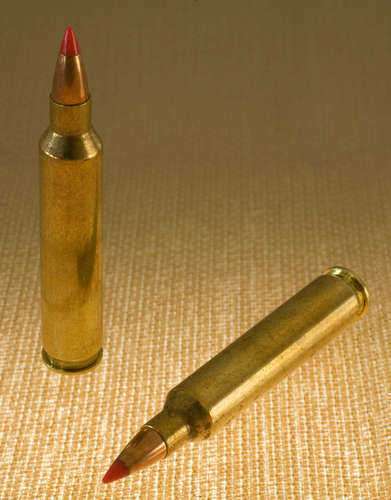
The purpose of a rifle may dictate the caliber of weapon. For instance, hunters often use a lower caliber rifle when they are hunting small game. Yet, hunters may use a larger caliber if they are hunting game such as bears. Lower caliber bullets are able to more easily penetrate game, but larger caliber bullets have more power. The caliber of weapons which is allowed to be used for hunting, will likely be dictated by state law.