Machine Guns At A Glance
📅 2026 Update: Changes in U.S. Gun Laws and Regulations
Since the original article was published, there have been ongoing discussions and interpretations regarding U.S. gun laws. While the foundational aspects of gun ownership remain, various state laws and federal regulations continue to evolve. Readers can find the original article further down this page for more background information.
⚖️ Recent Legal Interpretations
The interpretation of the Second Amendment is still a hot topic. Courts have continued to analyze what "the right of the people to keep and bear Arms" means. This affects how laws are applied in different jurisdictions.
- 📌 State Variations: Different states interpret gun rights in various ways, leading to different rules on ownership and carry permits.
🌐 Changes in Regulatory Bodies
The Bureau of Alcohol, Tobacco, Firearms and Explosives (ATF) remains the main federal agency overseeing gun laws. The ATF frequently updates its guidelines and regulations.
- 🔍 Compliance Requirements: It is important for gun owners to stay updated on compliance rules as they can change frequently.
⏳ Background Check Updates
Background checks play a key role in firearm purchases. The current system requires checks for almost all sales, but some loopholes still exist.
- 🚨 Recent Changes: States have begun implementing more stringent background checks to close these loopholes, aiming to improve public safety.
📜 State-Specific Regulations
Gun laws can differ significantly from state to state. Some states have passed new laws regarding concealed carry and firearm ownership.
- 🗺️ Local Laws Matter: Always check your local laws, as they dictate what is permissible in your area.
📌 Key Points Summary
- ⚖️ Ongoing legal interpretations of the Second Amendment affect gun ownership.
- 🌐 The ATF updates regulations regularly.
- ⏳ Background checks are becoming stricter in many states.
- 📜 State laws on gun ownership vary widely.
- 🗺️ Local regulations should always be checked for compliance.
💡 Tips for Navigating Gun Laws
Review the specifics of your situation with your attorney. Understanding the nuances of gun laws can help you navigate the system more effectively.
🔍 Understand Local Regulations
Different states have unique regulations regarding firearms. Research your state's specific laws to ensure compliance.
📝 Keep Records
Maintain accurate records of all firearm purchases and permits. This documentation can be crucial in legal situations.
🔒 Secure Your Firearms
Proper storage of firearms is not only a legal requirement in many states but is also essential for safety. Use safes and lockboxes to prevent unauthorized access.
📅 Stay Updated
Legislation can change frequently. Regularly check for updates on both federal and state gun laws to remain informed.
🗣️ Engage with Local Advocacy Groups
Joining local gun rights or safety advocacy groups can provide valuable information and support. These groups often have resources to help navigate legal requirements.
🏆 Free Options Ranked by User Reviews (2026)
No national paid service in this area met the review threshold. Therefore, this section lists free government and nonprofit resources for information on gun laws and regulations.
🥇 1. Bureau of Alcohol, Tobacco, Firearms and Explosives (ATF)
The ATF provides essential information on federal firearms regulations. This includes details on licensing, classifications, and compliance requirements.
- 🛡️ Who It Helps: Gun owners and sellers looking for clear guidance on federal laws.
🥈 2. National Rifle Association (NRA)
The NRA offers resources on firearm classifications, safety, and legal considerations. It serves as a hub for both education and advocacy regarding gun rights.
- 📚 Who It Helps: Individuals seeking knowledge about firearm ownership and safety practices.
🥉 3. State Government Websites
Each state has its own laws regarding gun ownership. Official state websites provide updated information on regulations, fees, and processes.
- 🌐 Who It Helps: Residents wanting to understand their local laws and requirements for gun ownership.
4️⃣ Legal Aid Organizations
Various nonprofit organizations offer guidance on firearm laws and rights. These groups can assist individuals in understanding their legal options.
- 🤝 Who It Helps: Those needing legal support or clarification on their rights regarding firearms.
🔎 What to Check Before Paying for Help
- 🔍 Verify the provider's credentials.
- 📜 Confirm they offer free consultations.
- 💬 Look for user reviews and testimonials.
- 🏢 Ensure they specialize in firearm laws.
❓ Frequently Asked Questions
❓ What is the current status of the Second Amendment?
The Second Amendment remains a crucial part of the U.S. Constitution. Ongoing court cases continue to shape its interpretation.
🔍 How do background checks work today?
Background checks are required for most firearm purchases. They aim to prevent individuals with certain criminal records from acquiring guns.
📅 Are there new laws concerning concealed carry permits?
Yes, many states are revising their laws regarding concealed carry. Some are making it easier to obtain permits, while others are tightening restrictions.
📜 Where can I find state-specific gun laws?
The best source for state-specific laws is your state government website. These sites provide detailed information about local regulations.
🔒 What are the storage requirements for firearms?
Many states have laws requiring firearms to be stored securely. This often means using a locked case or safe to prevent unauthorized access.
📊 How can I stay informed about changes in gun laws?
Regularly check official sources like the ATF and state government websites. Joining advocacy groups can also provide current updates.
⚖️ Recent Court Cases Impacting Gun Laws
Recent court rulings continue to shape the landscape of U.S. gun laws. These cases often address the balance between individual rights and public safety.
- New York court vacates weapon possession conviction of AsburyAppellate Division of the Supreme Court of the State of New York · July 24, 2026
- New York court affirms conviction of Alfred Bax for weapon chargesAppellate Division of the Supreme Court of the State of New York · July 24, 2026
- Utah Court upholds murder conviction in party shooting caseCourt of Appeals of Utah · August 6, 2026
- Court upholds conviction of Maurice Mayo for weapon chargesAppellate Division of the Supreme Court of the State of New York · August 12, 2026
For more recent rulings, feel free to browse more rulings on the news page.
End of October 2026 Update
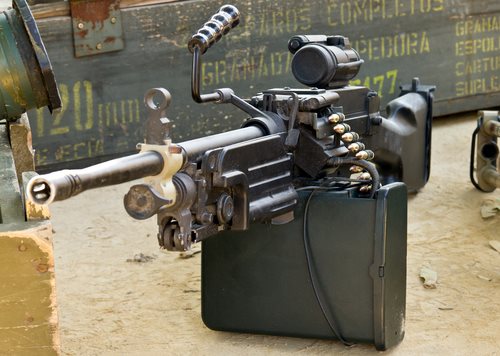
Machine guns are designed as fully automatic weapons which can be mounted or be portable, depending on the intended use of the weapon. For example, naval ships may have mounted machine guns to used for defense, in case the ship should be approached by enemy ships. Yet, members of the navy may also have potable machine guns so that they can easily move about the ship while utilizing the weapon.
A machine gun uses ammunition that is usually in an ammunition belt, which quickly and automatically loads the weapon as it fired. In order to continue firing, the shooter simply needs to hold the trigger down and the gun will continue to fire until the trigger is released or the shooter runs out of ammunition.
Machine guns generally fire several hundred rounds per minute. Federal law includes terminology which designates any fully automatic weapons as machine guns. The weapons are very accurate when mounted, but are less so when they are used as portable weapons.
The military commonly uses mounted machine guns as a form of suppressive fire. The guns can in fact be used for several hours, before they become too hot to continue. In fact, many machine guns have an air system built in to help the gun cool so that it may be fired for longer periods of time. There are machine guns which may overheat quickly, but the guns that have the cooling system built in, can be fired for hours before they must stop firing or overheat.