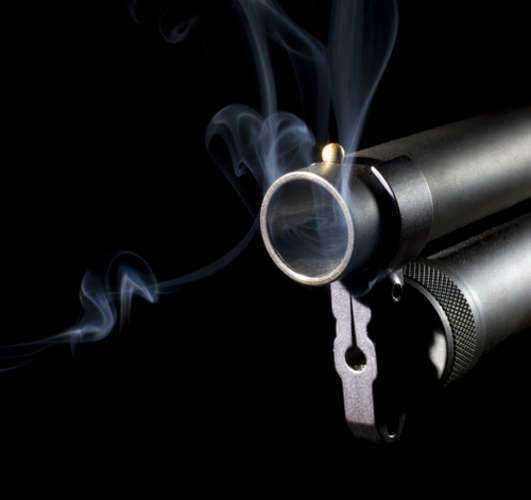
Make Sure You Know About The Gun Safety Issues
📅 2026 Update: Recent Changes in U.S. Gun Safety Laws
Since the original article was published, several key changes have occurred in U.S. gun laws. These changes impact how firearms are purchased, owned, and regulated across the country. The earlier article continues further down this page, offering foundational knowledge on gun safety issues.
🏛️ Federal Firearms License Fee Increase
In 2025, the Bureau of Alcohol, Tobacco, Firearms and Explosives (ATF) raised the application fee for a Federal Firearms License from $200 to $300. This change adds to the costs associated with legally selling firearms, which may impact small businesses and individuals seeking to enter the firearms market.
🚨 Introduction of Red Flag Laws
Between 2024 and 2026, several states, including California and New York, enacted or expanded "red flag" laws. These laws allow law enforcement to temporarily remove firearms from individuals deemed a risk to themselves or others. This aims to enhance public safety by preventing potential gun violence.
💵 Background Check and Permit Fees
As of 2026, the fee for background checks through the National Instant Criminal Background Check System (NICS) is $25. Additionally, concealed carry permit fees vary by state; for example, Florida charges $112 for applications, while Texas has a lower fee of $40. Understanding these costs is crucial for potential gun owners.
⏱️ Processing Times for Background Checks
NICS background checks are typically completed within minutes. However, if there is a delay, a firearm transfer can still be completed after three business days. For concealed carry permits, processing times differ by state, with Florida averaging 90 days and Texas taking up to 60 days.
📌 Key Points Summary
- Federal Firearms License fee increased to $300.
- Red flag laws enacted in states like California and New York.
- NICS background check fee is $25.
- Processing times for background checks are generally quick but can vary.
- Concealed carry permit fees differ widely by state.
💡 Practical Tips for Gun Safety
Review the specifics of your situation with your attorney to ensure you understand the laws that apply to you.
🛡️ Secure Your Firearms
Always store firearms in a gun safe to prevent unauthorized access, particularly by children. Proper storage is a fundamental step in promoting gun safety at home.
📜 Complete Required Training
Many states require firearm safety training courses for obtaining concealed carry permits. Completing this training can enhance your knowledge of safe firearm handling.
🔍 Know Eligibility Rules
Be aware of the federal and state eligibility criteria for firearm purchases. Individuals with felony convictions or domestic violence misdemeanants are typically prohibited from buying firearms.
⌛ Stay Informed About Waiting Periods
Some states enforce waiting periods for firearm transfers. For instance, California has a 10-day waiting period that buyers should factor into their purchasing timeline.
📝 Regularly Review Laws
Gun laws can change frequently. Staying updated on local and federal regulations will help you remain compliant and safe as a firearm owner.
🏆 Gun Services Ranked by User Reviews (2026)
Various services are available for those interested in firearms, including marketplaces and information resources. The following entries are based on Trustpilot data checked in October 2026. Ratings can fluctuate, and it’s essential to consider other factors as well, as unhappy customers often leave more reviews.
🥇 1. GunBroker.com
GunBroker.com has been rated 4.5 stars. This service is known for being an online marketplace offering a wide selection of firearms and accessories. However, some users have reported delays in customer service response times, which could be a factor for potential buyers needing immediate assistance.
🆓 Free Government and Nonprofit Resources
The Bureau of Alcohol, Tobacco, Firearms and Explosives provides free resources and guidance on firearm laws and regulations. The National Rifle Association’s Institute for Legislative Action also offers information on state-specific laws and legislative updates, helping individuals stay informed about their rights and responsibilities.
🔎 Considerations When Choosing Firearm Services
- 🏷️ Compare costs and fees associated with services.
- 📜 Review user feedback and ratings for reliability.
- 📅 Check processing times for permits and applications.
- 🔍 Look for educational resources on firearm safety and laws.
❓ Frequently Asked Questions
❔ What are red flag laws?
Red flag laws allow law enforcement to temporarily remove firearms from individuals deemed a risk to themselves or others. These laws aim to enhance public safety and have been enacted in several states.
❓ How long does it take to receive a concealed carry permit?
Processing times for concealed carry permits vary by state. For example, Florida typically processes applications within 90 days, while Texas can take up to 60 days.
❓ What is the fee for a background check?
As of 2026, the fee for a background check through the National Instant Criminal Background Check System (NICS) is $25. This fee is part of the process for transferring firearms.
❓ What are the eligibility criteria to purchase firearms?
Federal eligibility criteria prohibit firearm purchases for individuals with felony convictions, domestic violence misdemeanants, and those adjudicated as mentally defective. Some states have additional restrictions.
❓ Are there waiting periods for firearm transfers?
Yes, some states impose waiting periods before firearm transfers can be completed. For instance, California has a 10-day waiting period.
❓ How can I ensure safe storage of firearms?
Using a gun safe to store firearms and keeping ammunition separate is crucial for preventing unauthorized access and ensuring safety, especially in homes with children.
⚖️ Recent Cases Related to Gun Laws
Recent court rulings have focused on interpretations of the Second Amendment and the legality of various gun control measures. These cases can significantly affect how gun laws are implemented and understood in the U.S.
- Third Circuit upholds conviction in firearm smuggling caseCourt of Appeals for the Third Circuit · August 10, 2026
- Eighth Circuit affirms ruling on firearm possession caseCourt of Appeals for the Eighth Circuit · August 11, 2026
- Court affirms conviction of man for smuggling firearms to HaitiCourt of Appeals for the Third Circuit · August 10, 2026
- Seventh Circuit affirms ruling in firearm possession caseCourt of Appeals for the Seventh Circuit · August 7, 2026
Browse more rulings on the news page to stay updated on recent legal developments in gun laws.
End of October 2026 Update
Gun safety issues and practices may vary from state to state. It is important to always be aware of the state gun laws that exist in order to comply with the necessary regulations and legislation. Because state gun laws have a tendency to change without notice, it is important for gun owners to constantly check with the state laws in order to prevent any particular legal implications in the future.
Background
Gun Safety is the most important aspect about handling firearms. People do not need to be reminded that firearms are extremely dangerous, and that the safety can potentially save life if observed while using a gun or firearm. In order to properly handle and operate a firearm, one should be instructed in the basic gun safety rules in order to insure that there can be no harm done to him/herself or to others. The most basic of gun safety rules would be to simply use logic and common sense. An example would be if while using or learning to use a firearm, do not point the firearm at other people.
Though it may seem redundant to provide for written set of rules that are based in common sense, it necessary for the simple fact that it can be very easy for people to take them for granted. That is why organizations like the National Rifle Association and firearms expert Jeff Cooper compiled a list of basic gun safety rules that are made available through various sources in order to have a tangible and visual reference to adhere to. Though the NRA and Jeff Cooper's "Four Rules" may differ slightly, they both have at their root common sense, and can be easily followed and adhered to by any person seeking to use a firearm.
Knowing How to Use a Gun
Operating and using a firearm is deceivingly simple; you point, aim, and shoot. However, there is much more to consider even before picking up a gun and firing it. Many aspects regarding firearms may be overlooked that are crucial when considering the danger they may pose to people. The utmost regard for safety should be at the top of the priority when handling firearms. Gun safety rules or tips are simple enough that everyone should learn and employ them at all times when using a gun. Common sense being at the root of their inception, they provide for easy guidelines that should be followed by all who use firearms. Not only do they provide for a safe environment, but also instill a discipline that makes the activity more enjoyable as well.
Furthermore, in knowing how to use a gun, one should be completely aware of the firearms capabilities and functions. Again, safety being at the root of learning how a firearm works, it also allows for the possibility of using other guns and firearms that may be more complex or powerful using the gained experience from handling a simpler firearm. This can provide for the possibility of making the use of firearms a more enjoyable experience in being able to handle different types of guns.
Guns and Children
Firearm safety is a concept that all firearm and gun owners must be fully aware of and employ at all times. This extends particularly to those who may have young children or teenagers. Unfortunately, guns have been linked to many accidental deaths of children and young adults due to accidental discharge, and in some cases, suicide.
It has been the recurring story line of a child finding his father's gun, playing with it as if it were a toy, and then the child shoots him/herself or someone around them. This type of misfortune can be prevented if firearm owners took the necessary precautions to secure and store the weapons appropriately so the only people that have access to them are those who are qualified or experienced in handling or using firearms.
Guns and children are often the topic fueling the constantly battled dispute regarding gun rights and gun laws. Many see these incidents as reasons to further restrict firearms because they try to link firearms and children deaths together.
Though a valid argument, it is up to the gun owners to take the responsibility of properly storing their guns, as well as educating their children about firearms so they develop a respect for them, not regard them as a fascinating toy. If children were to learn more about guns, it can be deemed that certain accidents can be prevented, and save lives in the process.
Holsters
Gun Holsters are an important facet of gun safety that may often be overlooked. At a simple glance, a gun holster may be assumed to be designed simply to carry a gun on a person. However, an in-depth look at gun holsters will most definitely give more credit to their gun safety capabilities. Gun holsters are intended to carry a firearm, however, many considerations are taken in to account in their design. There are various types of gun holsters available, all serving a specific purpose and function that, depending on its type of user, may prove to aid in their use of the firearm.
Gun holsters are often classified upon the specific wearer or user, or where the holster itself is carried. Because functionality is a key component for the construction of gun holsters, many types exist in order to allow a user to appropriate choose the one that would best suit his/her needs. A holster not only takes in to consideration that a gun is to be carried, but also how, where, access to firearm, security, and comfort.
For those reasons, specific individuals will have specific gun holsters, such as law enforcement and their Duty Holsters, and the military and their Tactical Holsters. Each type of these holsters have specific design features and criteria that allow their users to to employ their weapons with greater ease, carry them safely, and have easy access for combat situations. Gun holsters may simply carry guns, but after given a further look in how they are designed and manufactured, it is easy to see that gun safety is at the root of their creation.
Gun Safes
Gun Safes are an important part to consider in regards to gun safety. Though much of the safety precautions may deal directly with the use or handling of firearms, their storage is a factor that must also be adhered to. The proper storage of firearms may often be overlooked because of the assumption that most of the dangerous hazards or situations occur during the actual firing or discharge of a weapon. However, if a firearm is improperly stored--especially if kept loaded--it can prove to be a real danger, specifically to young children and curious teenagers.
Gun safes provide for a safe storage environment for firearms to be kept that can either provide for more security than a locking mechanism on a gun--such as a trigger lock--or act as added safety reinforcement. Gun safes come in a variety of options to choose from at the discretion of the firearm owner, depending on his/her needs. Gun safes differ from types of locking mechanisms, construction strength and protection, as well as in size and capabilities. Regardless of the type of gun safe options, it should be a consideration in the minds of all firearm owners seeking to protect their firearms, and more importantly their family, from themselves to outside unauthorized users of their guns.
Protection
Gun safety rules and regulations can be regarded as the most critical aspect when using or firing guns. Regardless of the practice, it is absolutely essential that these guidelines be adhered to and observed at all times when handling or shooting firearms in order to preserve for a safe environment. An aspect of gun safety that may be often overlooked is using the appropriate gun protection wear or gear according to the activity or practice at hand. There two basic components of gun safety protection and they are gun safety eye protection and ear or hearing protection.
These two types of protection items come in various forms and styles, adding personalization options to allow for a more complete, safe, and comfortable safe shooting environment. Protection gear will also depend on the type of firearm activity. Hunters will obviously have other types of equipment to consider along with the two basic gun protection items. It is important to be fully prepared before using firearms, and this also includes taking in to consideration the firearm activity and the surrounding environment.
Cleaning and Upkeep
An important aspect to firearm and gun safety is assuring that firearms work properly before they are ever used or fired. Like any other tool, a gun or firearm must maintained and serviced in order for it to function correctly and efficiently. One of the main factors to keeping a firearm working and functioning at its optimum is gun cleaning. Gun cleaning helps the a firearm work at its best by removing any particles or build up left behind by its use and certain types of ammunition. Removing the build up of copper and powder residue, a firearm is less likely to jam or stop functioning.
A gun cleaning kit is the essential tool to have when a gun is to be serviced and maintained. Gun cleaning not only removes unwanted build up or residue from the weapon, but it also allows for the inspection of the gun and making sure that no internal components are faulty or need to be replaced.
A firearm must first be broken down and taken apart in order to successfully clean it. It is absolutely important to make sure the weapon is unloaded before cleaning the gun to prevent any accidental discharge. In learning how to clean a gun, an individual can take a first-hand look in to the internal components of a firearm and gather an understanding to their functions and how they work. This insight can provide useful in the future when minor problems happen such as jamming or replacing gun parts and components. Like any machine or tool, firearms need to be serviced in order for them to work and function properly.