Gun Holster Purpose
📅 2026 Update: Recent Changes in Gun Laws and Holster Use
Since the original article was published, important changes in gun laws have taken place across several states. These changes affect how people can carry firearms, including new permit requirements and court rulings. The earlier article continues further down this page.
⚖️ Supreme Court Impact
The New York State Rifle & Pistol Association, Inc. v. Bruen decision in June 2022 greatly influenced state gun laws. This ruling removed the "good cause" requirement for concealed carry applicants.
As a result, many states have adjusted their laws to ease the process of obtaining concealed carry permits.
🏛️ New State Laws
California passed Senate Bill 2 on January 1, 2024, which replaced the "good cause" requirement with objective eligibility criteria for concealed carry permits. In South Carolina, House Bill 3594, enacted on March 7, 2024, allows permitless carry, meaning residents can carry concealed handguns without a permit. Louisiana followed suit with Senate Bill 1 on July 4, 2024, also allowing permitless carry.
🌞 Changes in Florida
In September 2025, Florida's First District Court of Appeal struck down the state's ban on open carry. This ruling declared the ban unconstitutional under the Second Amendment. Now, residents can legally carry firearms openly in the state.
📃 Ongoing Federal Legislation
H.R. 38, the Concealed Carry Reciprocity Act of 2025, was introduced in early 2025. This bill aims to allow concealed carry permit holders to carry handguns in any state that permits it.
By October 2025, it had cleared the House Judiciary Committee and awaits a full House vote.
📌 Key Points Summary
- ⚖️ Supreme Court ruling removed "good cause" for concealed carry.
- 🏛️ New laws in California, South Carolina, and Louisiana allow for easier concealed carry.
- 🌞 Florida legalized open carry following a court ruling.
- 📃 Federal legislation for concealed carry reciprocity is progressing.
💡 Tips for Understanding Your Rights and Responsibilities
Review your personal situation carefully with your attorney to understand your rights and obligations regarding gun ownership and permits.
📑 Understand State Requirements
Each state has unique requirements for concealed carry permits. Familiarize yourself with your state's laws to ensure compliance and avoid penalties.
📅 Keep Track of Deadlines
Most states allow you to submit renewal applications up to 90 days before your permit expires. Mark these dates on your calendar to avoid lapses in your permit.
🔍 Check Eligibility Criteria
Ensure you meet all eligibility criteria for obtaining a concealed carry permit. This includes age, citizenship, and background check requirements.
💵 Budget for Costs
Concealed carry permit costs can vary significantly. Be prepared for application fees, fingerprinting, and potential training course expenses.
🏫 Complete Required Training
Some states require a specific number of hours in training before issuing a permit. Research your state’s training requirements to ensure you are adequately prepared.
🏆 Free Options Ranked by User Reviews (2026)
No national paid service in this area met the review threshold, so this section lists free government and nonprofit resources available for those seeking assistance with gun permits.
🥇 1. Virginia State Police
The Virginia State Police provides essential information regarding concealed handgun permits. Their website offers guidance on the application process, eligibility criteria, and renewal procedures. This resource is helpful for Virginia residents seeking to understand their rights and responsibilities under state law.
🥈 2. North Carolina Sheriff's Association
The North Carolina Sheriff's Association assists individuals in navigating the concealed handgun permit process. They offer valuable resources and information tailored to applicants in North Carolina. This organization aims to ensure that residents are well-informed about their options and the legal requirements.
🥉 3. LegalClarity
LegalClarity offers comprehensive guides and updates on concealed carry laws across various states. Their resources help users stay informed about changes in legislation and understand the nuances of their state's laws. This can be particularly beneficial for those considering applying for a concealed carry permit.
🔎 What to Check Before Paying Anyone for Help
- 🏷️ Verify if a service is truly necessary for your situation.
- 🔍 Compare costs among free resources first.
- 📜 Confirm that the information is up-to-date and accurate.
- 🛡️ Ensure the source is reputable and trustworthy.
❓ Frequently Asked Questions
❓ What is the process for obtaining a concealed carry permit in Virginia?
In Virginia, you can obtain a concealed handgun permit application from the local circuit court or the Virginia State Police website. The application is processed, and the permit should be issued within 45 days if there are no disqualifying factors.
📅 How often do I need to renew my concealed carry permit?
Concealed carry permits typically require renewal every five years, but this can vary by state. Applicants should check their state's specific renewal requirements for accurate timelines.
🔍 What disqualifies someone from obtaining a concealed carry permit?
Federal law prohibits firearm possession for individuals with felony convictions, certain domestic violence misdemeanors, active restraining orders involving intimate partners, and mental health adjudications. Each state may have additional criteria.
🚨 Are there training requirements for concealed carry permits?
Yes, many states stipulate training requirements for obtaining a concealed carry permit. Some require a minimum number of instructional hours to ensure that applicants understand responsible firearm handling.
📈 What are the typical costs associated with concealed carry permits?
Application fees for concealed carry permits can range from about $20 to over $100, depending on the state. Additional costs may include fingerprinting, background checks, and training courses.
🏛️ What recent laws have been enacted regarding concealed carry?
Recent legislation has made significant changes, such as permitless carry laws in South Carolina and Louisiana, and the striking down of open carry bans in Florida. These developments reflect ongoing changes in firearm laws across the country.
⚖️ Recent Cases Related to Gun Laws
Several recent court rulings have significantly impacted gun laws and concealed carry regulations. These rulings reflect ongoing changes in how states interpret the Second Amendment and address the rights of individuals to carry firearms.
- Court dismisses indictment against Rahseem D. in shooting caseNew York Supreme Court, New York County · November 13, 2025
- Ohio Court affirms conviction for weapons under disabilityOhio Court of Appeals · October 2, 2026
- New York court affirms conviction of Michael Mease for weapon chargesAppellate Division of the Supreme Court of the State of New York · October 2, 2026
- New York court affirms conviction for illegal weapon possessionAppellate Division of the Supreme Court of the State of New York · October 2, 2026
Browse more rulings on the news page to stay updated on recent legal developments.
End of October 2026 Update
A gun holster is basically a device that allows a person to carry, hold, or restrict movement of a handgun. Gun holsters are commonly used where the wearer may need quick access to the firearm, or for the purpose of concealed carry, as permitted by law.
A gun holster is design with a few important factors in mind. Firstly, a gun holster must protect the firearm adequately. Secondly, it must allow the firearm to fit securely within, with out constricting the ability to draw the weapon or return it to the holster. Lastly, by its design, a holster is supposed to allow for easy access so an individual can withdraw the weapon with one and hand, and also return it safely with one hand. An important facet to consider is that holster are also designed with the wearer in mind; a holster that may function properly for one individual may not do so for another.
The type of holster worn is typically bound to personal choice, for the only possible exception being when it is issued for law enforcement or military personnel. Therefore, there is quite the number of gun holsters available for firearm users. Not only do they differ in type and function, but also in the type of materials used and what kind of firearm they are to house within.
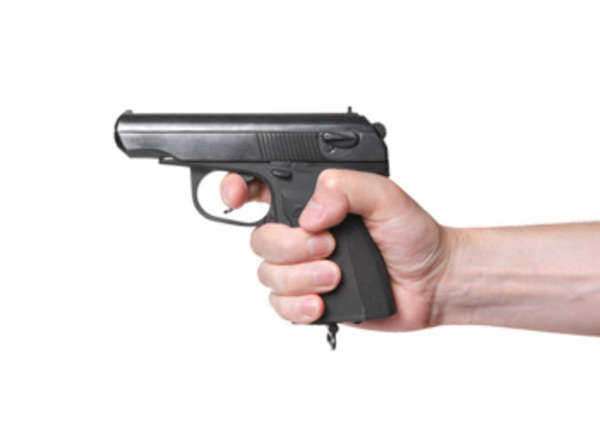
By the common populace, a holster simply holds a gun, but is known that where the gun is located on the person may often differ. This is due to holster being design with practicality and functionality in mind. Gun holsters are typically located around a person's waistband, or belt. That is the most common associated location for a firearm holster.
The most commonly used holster, as per law enforcement and military, is the outside the waistband holster or belt holster. In the industry, this type of holster is commonly referred to as an OWB holster. An inside the waistband, or IWB, holster is also made. This weapon is designed to be attached inside the wearer's pants, which offers more concealment.
Shoulder holster are also another common type frequently used. It is worn in similar fashion as a backpack, and the holster itself is attached to either the right or left side of the person. Some offer the option of dual holsters, one firearm at each side. Pocket holster are made for gun itself to be carried inside a pocket, and is generally reserved for smaller weapons to act as backup for a main weapon.
Another common holster used for backup firearms is the ankle holster because it easily conceals the weapon Thigh holsters are slowly becoming the new accepted standard. They are secured at the thigh, at or near where the arm naturally hangs for the user. This type of holster offers quick access and withdrawal capabilities.
It is often employed by law enforcement or military personnel that may require the use of tactical wear that may impede the use of waistband holster. Other holsters, such as the groin and lower back holsters, are still used today but quite rarely. Though both offer good concealment capabilities, they have been recently found to possible cause injury in close quarter combat situations if the wearer falls or takes some sort of impact at the location of the holster.
Many law enforcement agencies do not allow back holsters to be worn by their officers because of the risk of spinal injury. The types of holsters available make it quite easy for the wearer to personalize his options depending on need and comfort. However, it is important to note that since many of these holsters are made with the ability to conceal in mind, it is important to check the local and state regulations concerning the carrying of concealed weapons and abide by those laws and regulations.
Gun holsters themselves can be categorized by their use. Gun holsters are usually categorized as follows:
Duty Holsters: Typically worn by law enforcement personnel
Tactical Holsters: Typically worn by military personnel
Concealment Holsters: Typically worn by plain-clothes officials and private users
Sporting Holsters: Typically worn for shooting sports and hunting situations
Depending on the type of holster, the materials used to make the holster will be chosen depending on how materials themselves will allow for better functionality of the gun holster. Duty holsters are typically made of leather, plastic, or nylon, and are designed to be open carry.
These holsters will typically be waistband holsters and used for service handguns. A key feature of duty holsters is that they often also vary on the security or retention of the weapon itself. This is designed so as an officer can not be disarmed by suspect. Tactical holsters, also referred to as Military holsters, are typically made out of plastic or nylon for purpose of being lighter in weight. It is not uncommon for the tactical holster to be designed in camouflage.
Typically, these holsters have minimum retention when compared to Duty holsters, though some may offer the option of a flap to cover the weapon entirely for protection purposes. Concealment holsters, as their name implies, are designed to be hidden from plain view. They are designed to be lightweight and comfortably worn, and vary depending on where the holster is to be carried on the person. Concealment holsters often use more surface area than the actual weapon may need so as to prevent any outlines of the gun to be perceived, thus making it discernible.
Materials used can range from leather, nylon, plastic, and synthetic materials. Sporting holsters are the most function-oriented designed holsters for they serve a specific purpose depending on the sporting event that employs them. These are the most specialized holsters available, and often serve the purpose of providing advantages within the realms of legality as per the specific event. Hunting holsters are often unique because they often must consider extra components of a firearm, such as telescopic sights or collapsible shoulder stocks.
Because gun holsters are designed based on purpose, functionality, personalization, and comfort, it is important in considering which type of holster suits the needs of an individual. Safety, concealment, durability, draw ease, retention, adjust-ability, and cost are all factors that should be considered before purchasing any kind of gun holster. Gun holsters are designed with the user in mind, and therefore, the user must contemplate how the firearm will be used and what kinds of situations or environments the employment of the firearm can or may occur.
Gun safety issues and practices may vary from state to state. It is important to always be aware of the state gun laws that exist in order to comply with the necessary regulations and legislation. Because state gun laws have a tendency to change without notice, it is important for gun owners to constantly check with the state laws in order to prevent any particular legal implications in the future.